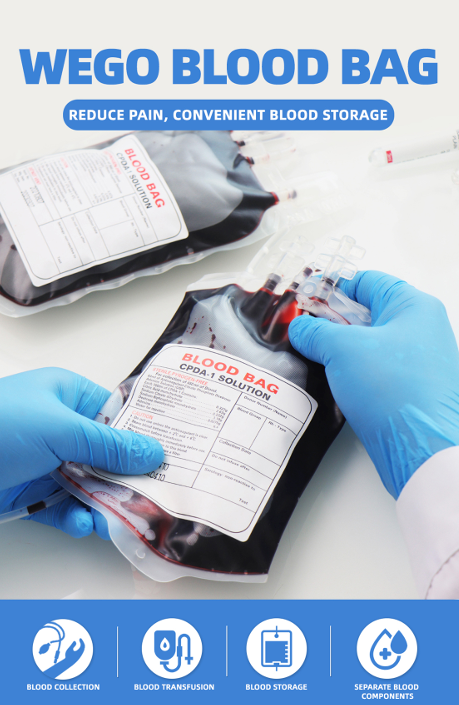

In clinical environments, certain tools form the operational backbone of essential procedures. Among these, the single blood collection bag is a primary example. This specialized

A disposable syringe is a medical injection tool designed for single-use.
WG–NF-03
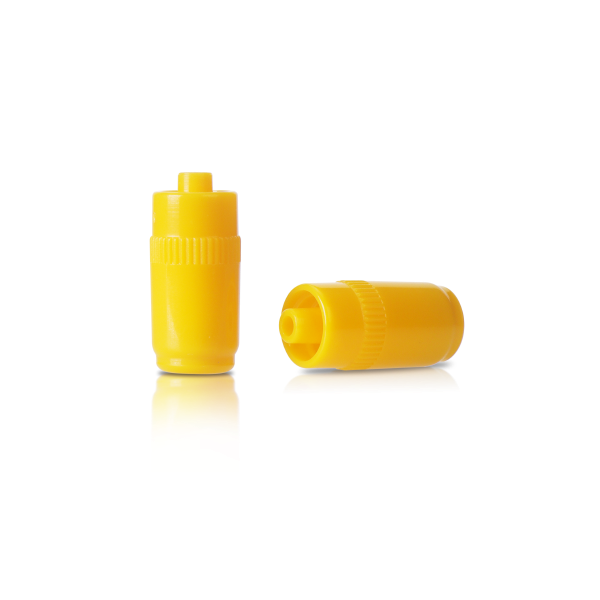
Needle-free connectors are medical devices designed to provide a means for accessing and connecting to intravenous (IV) lines without the use of needles.
They are used in healthcare settings for various applications, including administering medications, infusing fluids, and drawing blood.
Needle-free connectors are medical devices designed to provide a means for accessing and connecting to intravenous (IV) lines without the use of needles.
They are used in healthcare settings for various applications, including administering medications, infusing fluids, and drawing blood.
Needle-free connectors eliminate the need for needles when accessing IV lines. This helps reduce the risk of needlestick injuries for healthcare providers and minimizes discomfort for patients. |
It uses positive displacement technology, which helps prevent blood reflux and minimize the risk of catheter occlusions when connecting or disconnecting. |
Needle-free connectors contribute to maintaining a closed system during IV administration, reducing the risk of contamination and infection. Closed systems help protect both healthcare providers and patients. |
The connectors are designed to be compatible with various types of IV catheters and tubing systems, ensuring flexibility in their application. |
Needle-free connectors have a clamping mechanism that allows healthcare providers to control the flow of fluids or medication easily. |
Needle-free connectors are designed with antimicrobial materials or coatings to help reduce the risk of bacterial contamination. |


In clinical environments, certain tools form the operational backbone of essential procedures. Among these, the single blood collection bag is a primary example. This specialized

Consider the intricate journey of a surgical suture, from raw material to a sterile device closing a wound inside the human body. This path is

We recognize that in surgical settings, the success of a procedure extends beyond the operation itself to the materials that support healing. Among these, the

The surgical management of thoracolumbar spinal instability requires a method that can adapt to complex anatomical presentations. This region, serving as a transitional zone between