

As the new year begins, WEGO Overseas Group would like to extend our warmest New Year greetings to partners, customers, and colleagues around the world.
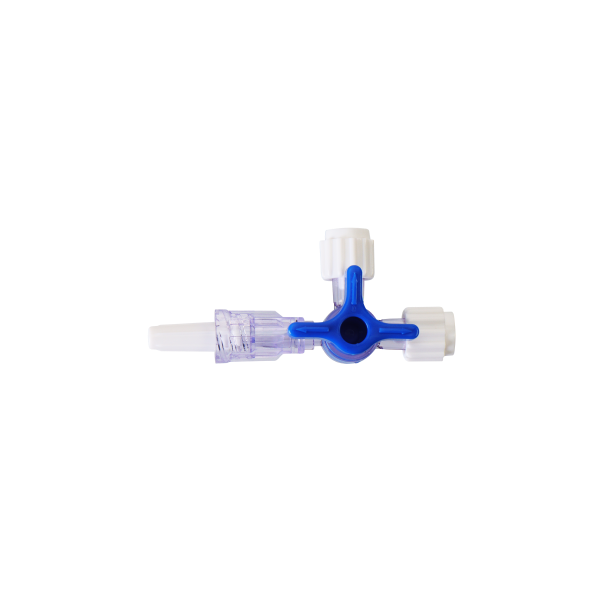
WEGO three-way stopcock is a small plastic or metal valve with three ports that rotate to control fluid flow.
WG-FWV-01
The three-Way Stopcock is a medical device used in healthcare settings, particularly in intravenous (IV) therapy and other medical procedures. It is a small, plastic, or metal valve with three ports that can be rotated to control the flow of fluids.
| The three-way stopcock has three openings or ports that allow for the connection of tubing or syringes. The ports are labeled as the “inlet,” “outlet,” and “flush” or similar terms. |
| The valve can be rotated to control the direction of fluid flow. This allows medical professionals to switch between different solutions or medications without disconnecting the device. |
| The ports have Luer lock or similar connectors, providing a secure and leak-proof connection with tubing or syringes. |
| It has a transparent or translucent body, allowing healthcare providers to visually inspect the fluid and check for any air bubbles. |
| The valve often has an “off” or “stop” position that blocks the flow of fluids when needed. |

As the new year begins, WEGO Overseas Group would like to extend our warmest New Year greetings to partners, customers, and colleagues around the world.

From all of us at WEGO, we extend our warmest wishes to our global partners and customers. May this festive season bring joy, peace, and

In cardiac surgery, maintaining proper oxygenation of blood is critical for patient safety and successful outcomes. Membrane oxygenators, often referred to as oxygenators for CPB (cardiopulmonary

The efficacy of a membrane oxygenator, a core component in cardiopulmonary bypass (CPB) systems, depends fundamentally on the advanced materials from which it is constructed.