







Cardiac Safety and Surgical Precision
Extracorporeal Circulation Solutions
Discover WEGO’s advanced extracorporeal circulation systems engineered to support safe perfusion, stable hemodynamics, and reliable protection throughout cardiac surgery.
WEGO Extracorporeal Circulation (ECC) Solution delivers an integrated portfolio of high-performance devices engineered to support safe, stable, and efficient cardiopulmonary bypass during cardiac surgery. Covering oxygenation, filtration, myocardial protection, fluid balance management, and circulatory stabilization, the system provides a cohesive platform widely used in CABG, valve surgery, congenital repairs, aortic procedures, and complex cardiovascular interventions.
Each component—oxygenators, hemoconcentrators, cardioplegia delivery systems, cardiac stabilizers, venous cannulae, and arterial filters—is developed with strong biocompatibility, controlled flow dynamics, and strict quality standards to ensure low hemolysis, consistent perfusion, and predictable myocardial protection across surgical workflows.
Backed by WEGO’s large-scale manufacturing, automated production, and global quality certifications, the ECC portfolio integrates smoothly into existing CPB circuits and perfusion protocols, enabling cardiovascular centers to maintain high-throughput surgical capacity and uncompromised patient safety.


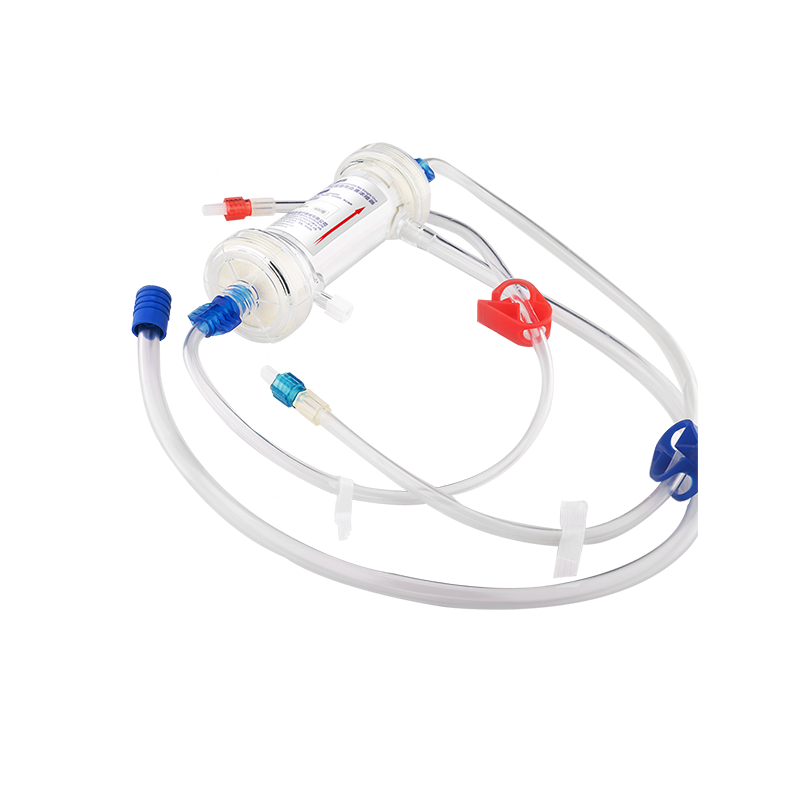
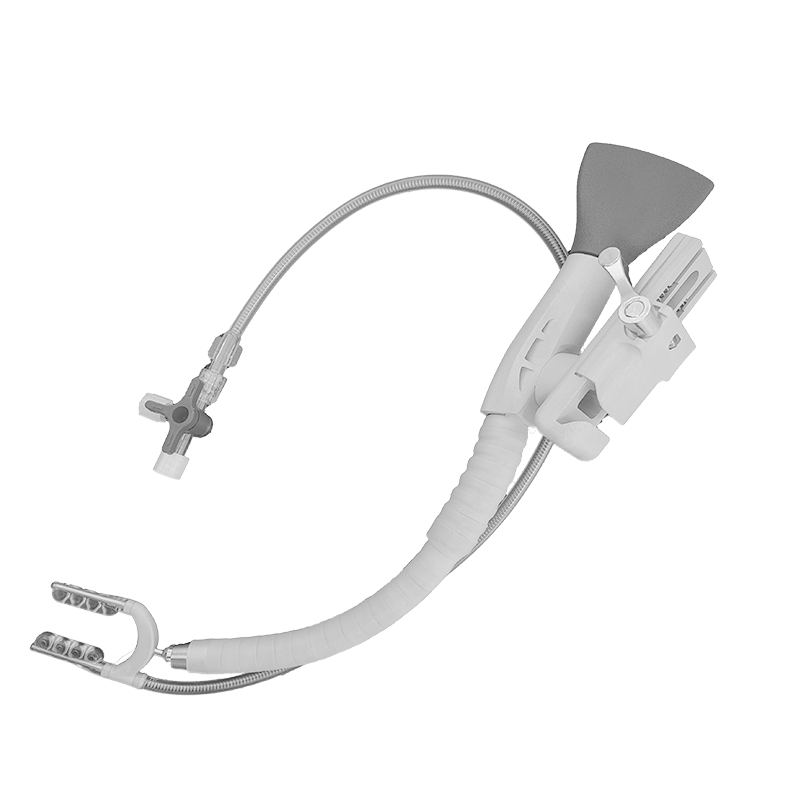
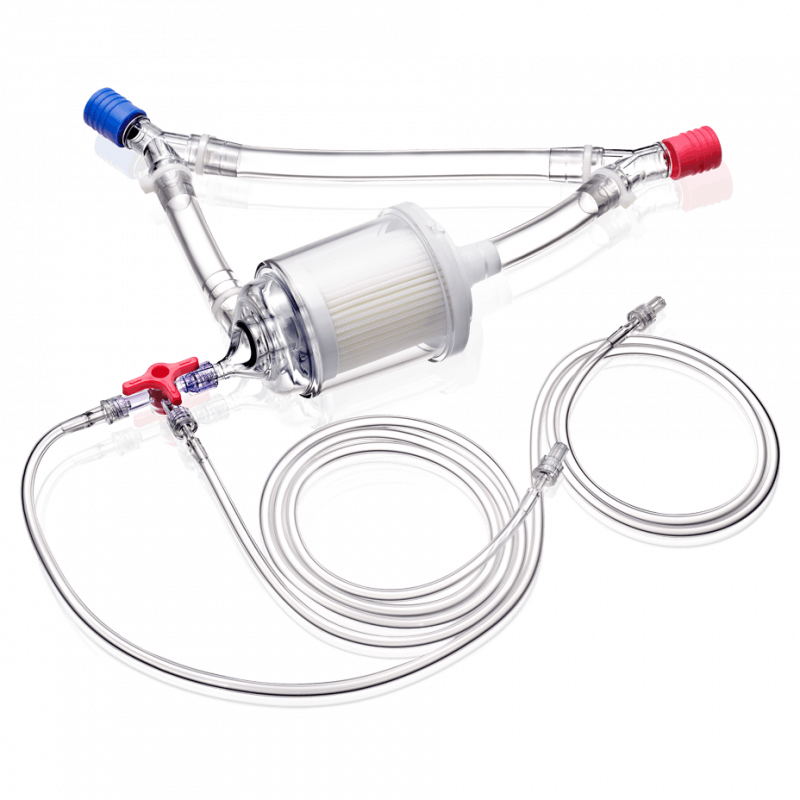
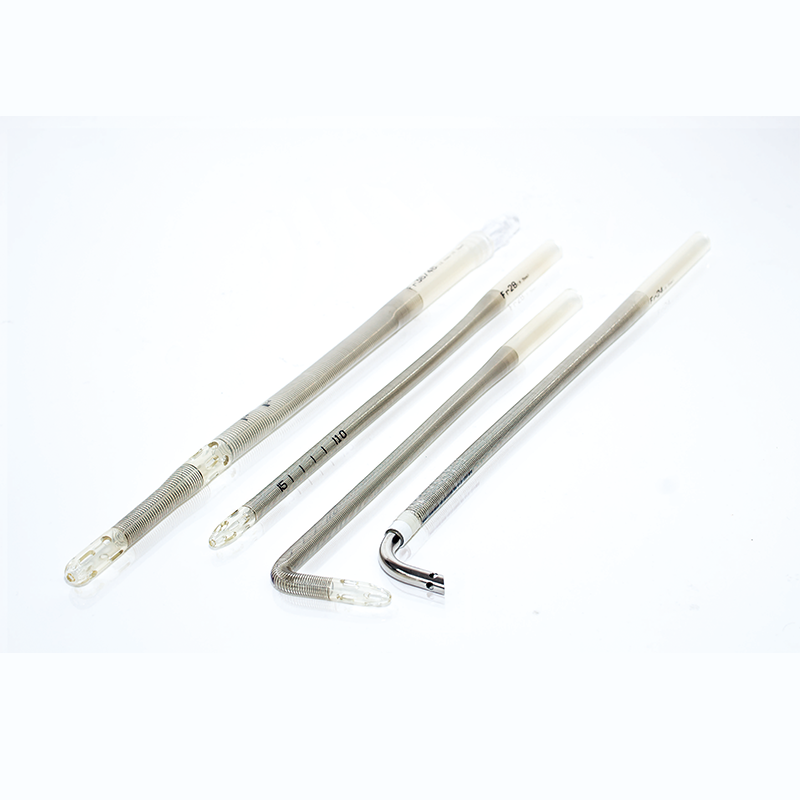
Ensures reliable venous drainage with smooth flow design, low resistance, kink-proof tubing, and multiple size options for different patient anatomies.
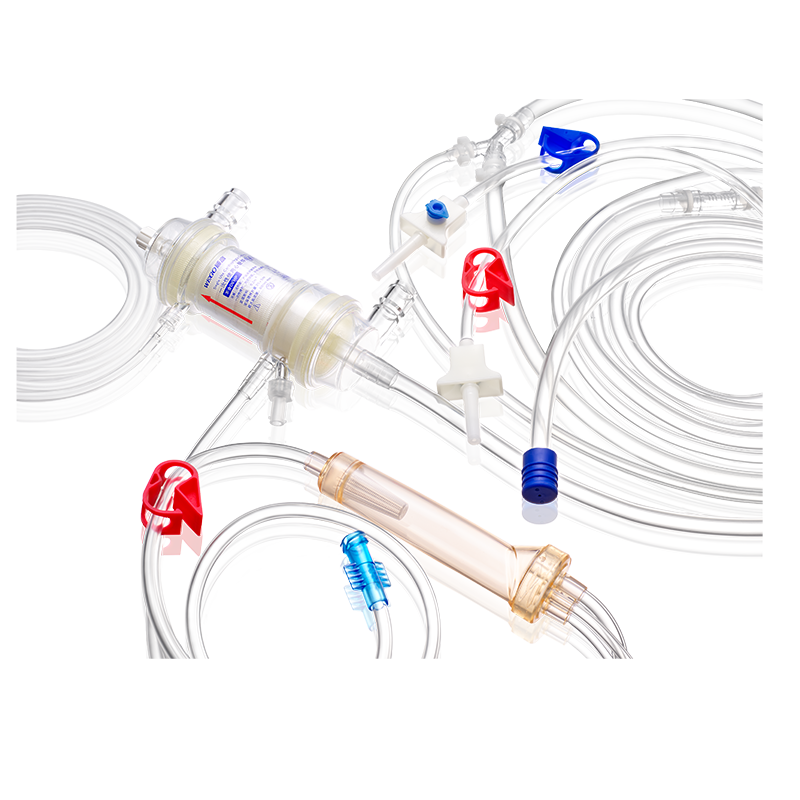

Extracorporeal Circulation (ECC)
Extracorporeal Circulation (ECC) is a closed-loop system that temporarily replaces the heart’s pumping and the lungs’ gas-exchange functions during cardiac surgery, ensuring stable perfusion, oxygenation, CO₂ removal, and temperature control throughout the procedure. By integrating venous drainage, membrane oxygenation, pumping, and arterial return, ECC provides a motionless, bloodless surgical field while maintaining essential organ perfusion. Its precision in anticoagulation, hemodilution, and air-safety management makes it the physiological backbone of modern cardiopulmonary bypass, enabling complex cardiac repairs with improved safety and predictable clinical outcomes.

WEGO Oxygenator System
WEGO Oxygenator System is available in two product lines—the Overseas Version and the China Domestic Version—each engineered to meet the regulatory, clinical, and performance requirements of their respective markets. The Overseas Version is manufactured under ISO 13485 and international performance standards, featuring enhanced gas-exchange efficiency, optimized heat-exchange capability, high biocompatibility materials, low-hemolysis flow-path design, and durable membrane construction to support cardiac centers and perfusion teams across global markets that operate under ISO-based regulatory frameworks. The China Domestic Version complies with national cardiovascular device regulations and incorporates extensive local clinical insights, with refined membrane stability, optimized blood-flow geometry, anticoagulation performance, and seamless compatibility with domestic perfusion equipment—making it a widely adopted solution in Chinese cardiac surgery.
Both versions utilize high-biocompatibility PMP/PP hollow-fiber membranes, engineered fiber alignment, uniform hemodynamic flow paths, and integrated heat-exchange modules to ensure efficient oxygen transfer, rapid CO₂ removal, stable thermal regulation, and minimized blood activation. Supported by WEGO’s large-scale manufacturing capability, rigorous material and process validation, and deep expertise in ECC/CPB clinical workflows, the WEGO Oxygenator System provides a reliable, high-performance solution for adult, pediatric, and complex cardiac procedures across global and domestic markets.

Fiber Membrane Technology
WEGO uses high-performance PMP or PP hollow-fiber membranes with engineered pore structures, providing high oxygen-transfer efficiency, stable CO₂ removal, and low plasma leakage. Optimized fiber spacing and flow-path geometry minimize shear stress and hemolysis, delivering stable performance across adult and pediatric CPB durations.

uality Control
WEGO operates one of the largest cardiovascular consumable manufacturing platforms in Asia, with fully automated membrane winding, precision extrusion, injection molding, EO sterilization, and in-house biocompatibility labs. Every oxygenator undergoes strict leak testing, gas-transfer verification, heat-exchange inspection, and 100% visual QC to ensure consistent reliability across large-volume production.

Trusted by Hospitals
With extensive adoption across domestic cardiac hospitals and growing international recognition, WEGO oxygenators support thousands of CPB procedures annually. Long-term clinical partnerships ensure continuous product optimization based on real surgical feedback.
Q1. What makes an oxygenator safe and effective during CPB?
A: A high-quality oxygenator must provide stable gas exchange, low pressure drop, minimal hemolysis, and strong biocompatibility. WEGO oxygenators use advanced membrane materials and optimized flow channels to maintain consistent O₂/CO₂ transfer and protect red blood cells during prolonged bypass.
Q2. Why is hemoconcentration important during cardiopulmonary bypass?
A:
Hemoconcentrators control hematocrit, electrolytes, and fluid balance. This reduces hemodilution, stabilizes oncotic pressure, and improves postoperative recovery. They also help reduce total priming volume and fluid accumulation during long procedures.
Q3. How does a cardioplegia delivery system improve myocardial protection?
A: A precise cardioplegia system ensures controlled temperature, flow, and distribution clarity, preventing ischemic injury while the heart is arrested. WEGO systems maintain stable myocardial metabolic conditions and reduce reperfusion injury risks.
Q4. How do venous cannula design features impact perfusion safety?
A: Good cannulae must provide smooth drainage with minimal resistance and no kinking. WEGO utilizes reinforced tubing, multiple size options, and optimized tip geometry to ensure stable venous return across adult and pediatric cases.

