

Proper sterilization is essential in medical and laboratory environments, and an autoclave machine plays a critical role in achieving this goal. Many facilities face challenges in
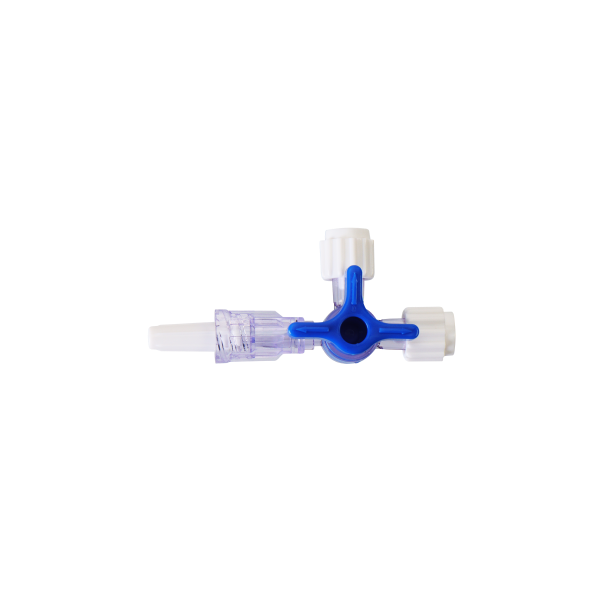
WEGO three-way stopcock is a small plastic or metal valve with three ports that rotate to control fluid flow.
WG-FWV-01
The three-Way Stopcock is a medical device used in healthcare settings, particularly in intravenous (IV) therapy and other medical procedures. It is a small, plastic, or metal valve with three ports that can be rotated to control the flow of fluids.
| The three-way stopcock has three openings or ports that allow for the connection of tubing or syringes. The ports are labeled as the “inlet,” “outlet,” and “flush” or similar terms. |
| The valve can be rotated to control the direction of fluid flow. This allows medical professionals to switch between different solutions or medications without disconnecting the device. |
| The ports have Luer lock or similar connectors, providing a secure and leak-proof connection with tubing or syringes. |
| It has a transparent or translucent body, allowing healthcare providers to visually inspect the fluid and check for any air bubbles. |
| The valve often has an “off” or “stop” position that blocks the flow of fluids when needed. |

Proper sterilization is essential in medical and laboratory environments, and an autoclave machine plays a critical role in achieving this goal. Many facilities face challenges in

Managing medical waste efficiently is a critical responsibility for healthcare facilities. Proper disposal of disposable vacuum blood collection tubes ensures safety, regulatory compliance, and environmental protection.

Phlebotomy protocols establish a specific sequence for filling blood collection tubes to protect sample integrity. This procedure, known as the blood collection tubes order of

In clinical laboratories, the lavender-top vacuum tube for blood collection is a familiar sight. This color indicates the presence of Ethylenediaminetetraacetic acid, or EDTA, a key