






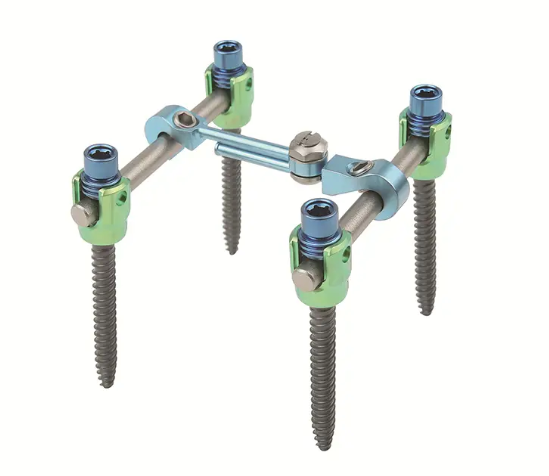
Orthopedic bone plates serve as essential internal splints, holding fractured segments in stable alignment to facilitate biological healing. The design of these implants, however, is far from uniform. Specific anatomical locations and fracture patterns demand specialized plates with unique engineering characteristics. Understanding the categorization of these devices—whether for a long bone shaft or a complex periarticular region—is fundamental for surgical planning. These specialized designs share a common goal with a spinal fixation system: to provide rigid, stable fixation that allows for early functional recovery. We will outline the primary categories of bone plates based on their intended anatomical application and mechanical function.
The Foundation: Compression and Neutralization Plates
Among the most common types are compression plates, which are designed to actively pull fracture fragments together. They often use dynamic compression holes that allow the screw to glide as it is tightened, creating interfragmentary compression across the fracture site. This direct force enhances primary bone healing by increasing stability and minimizing gaps. Neutralization plates are frequently used in conjunction with lag screws. The lag screw provides interfragmentary compression, while the plate acts to “neutralize” bending, rotational, and shearing forces that would otherwise stress the repair. These plates form the workhorse group for managing simple fractures in shafts like the radius or ulna.
Addressing Complex Anatomy: Bridging and Periarticular Plates
For complex, multi-fragmented fractures where anatomic reconstruction is not possible, bridging plates are employed. Their role is to span the comminuted zone, maintaining correct length and alignment without attempting to compress each fragment. This approach respects the biological processes of indirect healing. Periarticular plates represent a highly specialized category engineered for the unique challenges of metaphyseal and epiphyseal regions. They are contoured to match the specific anatomy of areas like the distal tibia or proximal humerus, often featuring multiple locked screw options in different trajectories to secure short articular segments, a concept also critical in a spinal fixation system for achieving purchase in vertebrae.
Specialized Designs: Reconstruction and Locking Plates
Reconstruction plates are identifiable by their deep, scalloped notches between screw holes. This design allows for three-dimensional bending, both contouring and twisting, to match irregular bony anatomy such as the pelvis or the distal clavicle. The advent of locking plate technology has significantly changed fixation strategies. These plates form a fixed-angle construct with the screw heads, functioning as an internal-external fixator. This design minimizes compression on the periosteum, making it advantageous for osteoporotic bone or periarticular fractures where screw purchase is a concern, a principle that also informs the design of a modern spinal fixation system.
The evolution of bone plate technology reflects a continued refinement in understanding biomechanics and biology. Selecting the correct type is a decisive step in achieving optimal outcomes, as each design addresses a specific clinical challenge. At WEGO Medical, our engineering philosophy recognizes the critical importance of this specialized toolset. While we apply this deep understanding of implant design across our portfolio, our expertise in developing sophisticated solutions is exemplified in our specialized spinal fixation system, created to meet the precise demands of spinal surgery.