







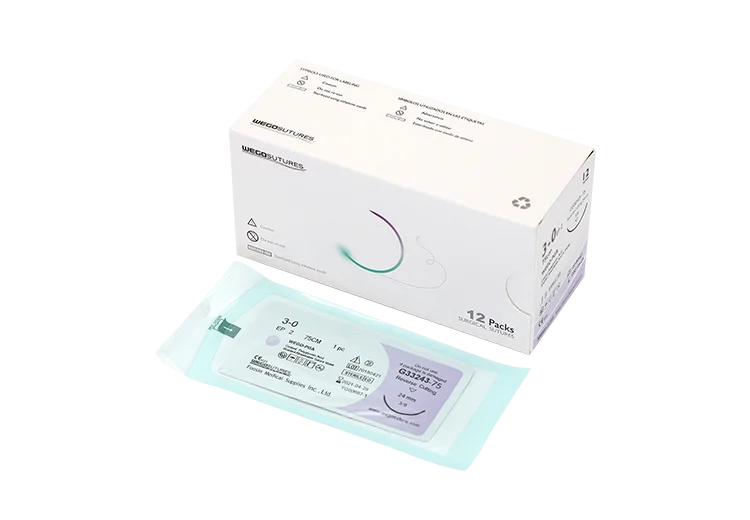
Surgical materials evolve to meet specific biological and mechanical requirements. A polyglycolic acid suture is a product of this evolution, designed as a synthetic absorbable strand for internal wound closure. We at WEGO Medical approach such materials by analyzing their core principles. Explaining a polyglycolic acid suture involves examining its polymer foundation, its interaction with the biological environment, and the practical rationale for its surgical use.
Foundation in Polymer Chemistry
The basis of this suture material is a synthetic polymer. Through industrial processes, monomers of glycolic acid are linked into long, repeating chains to form polyglycolic acid (PGA). This engineered creation allows for precise control over the filament’s initial physical properties, such as diameter and tensile strength. The synthetic nature of a polyglycolic acid suture differentiates it from biologically derived absorbables, offering a high degree of lot-to-lot uniformity. For WEGO Medical, supplying products with such consistency is a key part of supporting procedural predictability.
The Hydrolytic Degradation Process
Absorption is the defining characteristic of this suture category. Unlike non-absorbable materials, a polyglycolic acid suture is not intended to remain permanently in tissue. Its disappearance occurs through hydrolysis, where water within the body gradually breaks the polymer chains. This chemical reaction causes the material to lose its mechanical integrity at a predictable rate, transferring load to the healing tissue as it gains strength. The suture mass is then metabolized and removed through natural physiological pathways, leaving no permanent foreign material.
Handling Characteristics and Tissue Response
The physical behavior of a suture during placement influences surgical technique. A polyglycolic acid suture typically exhibits high tensile strength initially and handles with a degree of stiffness, which can provide positive knot security. The tissue reaction to any absorbable material is a consideration; synthetic polymers like PGA generally elicit a moderate, predictable inflammatory response that subsides as absorption proceeds. This profile makes it a frequent choice for approximating layers like fascia and subcutaneous tissue, where support is needed for several weeks.
A polyglycolic acid suture represents a deliberate application of materials science to a surgical need. Its purpose is to offer secure, temporary approximation of tissues during the proliferative phase of healing, after which the body assumes full structural responsibility. The material’s value stems from its engineered consistency and predictable absorption profile. By providing reliable access to such specialized products, WEGO Medical contributes to the array of options available to surgical teams, each selected for its alignment with specific wound healing dynamics.