






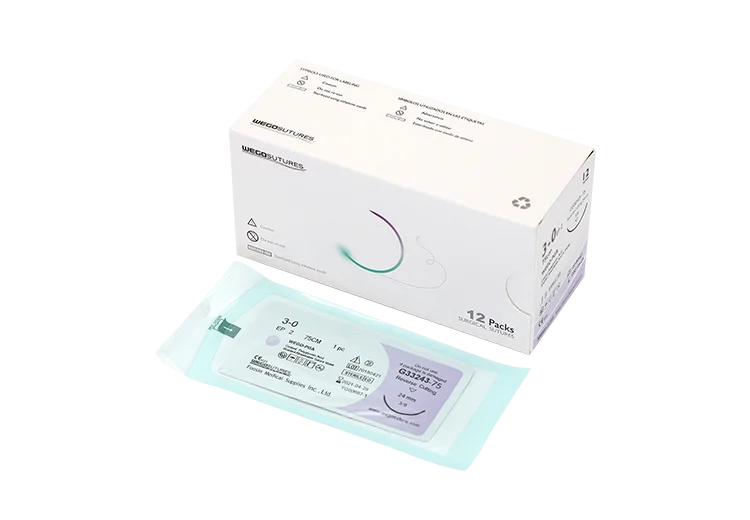
What defines the practical value of an absorbable suture in a surgical setting? Beyond mere strength, its utility is measured by how its physical characteristics interact with surgical technique and biological tissue. At WEGO Medical, our examination of material science leads us to appreciate the specific functional improvements offered by a polyglycolic acid suture that has been enhanced with a coating. This article details the operational and biological benefits this design provides.
Improved Manipulation and Knot Security
The first point of contact between surgeon and suture is tactile. An uncoated braided filament can exhibit higher drag, requiring more force to pass through tissue and potentially causing fraying. The application of a specific coating to a polyglycolic acid suture addresses this directly. This coating acts as a lubricant, significantly smoothing the passage of the suture through tissue. This leads to less tissue drag and trauma during the suturing process. Furthermore, this smoother surface allows filaments to sit together more snugly as a knot is formed. The result is a knot that tensions evenly and exhibits greater preliminary security, meaning it is less likely to loosen before the first throw is secured. This reliable handling is a key focus in the design philosophy at WEGO Medical.
Consistent and Predictable Absorption Profile
The primary rationale for using an absorbable material is to eliminate the need for removal while providing adequate wound support. The inherent property of polyglycolic acid is hydrolysis, where the material breaks down in the body over time. However, the coating on a polyglycolic acid suture can be engineered to moderate this process. It can help create a more predictable absorption timeline by initially regulating the rate at which fluid penetrates the braided structure. This predictability allows surgeons to select a suture with confidence, matching its known support duration to the expected healing time of the specific tissue being approximated, such as muscle or subcutaneous layers. This managed, consistent absorption is a critical functional advantage.
Reduced Tissue Reactivity and Enhanced Biocompatibility
Any foreign material introduced into tissue elicits a cellular response. The goal of modern suture design is to minimize this reaction to support undisturbed healing. The coating on a polyglycolic acid suture serves a biological function here. By encapsulating the individual braided filaments, it creates a smoother surface that results in less mechanical irritation as the suture moves through tissue. More importantly, a well-designed coating can help buffer the initial local acidic environment that can be associated with the polymer’s degradation. This leads to a lower overall inflammatory response, which can contribute to cleaner wound healing with less potential for excessive scar formation. For WEGO Medical, advancing biocompatibility is integral to product development.
The introduction of a coating transforms a standard filament from a simple mechanical device into a more sophisticated surgical tool. The benefits—from significantly improved handling and knot formation to a more predictable absorption rate and a moderated tissue response—directly address common surgical considerations. These functional enhancements make a coated polyglycolic acid suture a purposeful choice for procedures where these material characteristics align with surgical objectives. At WEGO Medical, our efforts are dedicated to refining these material properties, providing the surgical community with reliable options that support both their technique and their patients’ recovery pathways.