





Selecting the appropriate suture material is a routine yet critical decision in surgical practice, influencing healing and procedural success. Two common categories—braided absorbable sutures and smooth synthetic strands—present distinct characteristics. A coated polyglycolic acid suture serves as a primary example of the former, while materials like poliglecaprone or nylon exemplify monofilaments. We at WEGO Medical appreciate that the choice between them is not about superiority but about matching material properties to specific clinical needs and tissue behaviors.
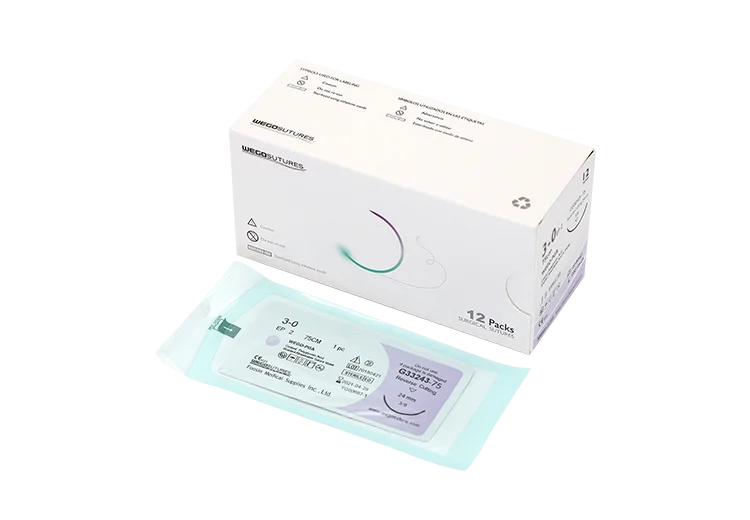
Material Construction and Handling Characteristics
The fundamental difference lies in physical structure. A coated polyglycolic acid suture is a multifilament braid, often treated with a coating to improve its passage through tissue and reduce capillarity. This construction provides excellent handling properties: high tensile strength, secure knot placement often requiring fewer throws, and good visibility against tissue. Conversely, a monofilament is a single, solid strand of synthetic material. This grants it a very smooth surface that passes through tissue with minimal drag but can make knots more prone to slipping if not secured carefully. The inherent memory of some monofilaments can also make them less pliable and slightly more challenging to handle. For surgeons, this distinction often comes down to a preference for secure knotting and ease of handling versus effortless tissue passage.
Tissue Interaction and Healing Response
How the suture interacts with the body over time is a primary consideration. A braided absorbable like a coated polyglycolic acid suture is designed to be broken down by hydrolysis, losing its strength predictably over weeks as the wound gains strength. The coating on a coated polyglycolic acid suture aims to minimize tissue drag and inflammatory response. However, any braided structure has a higher surface area which, if uncoated, could theoretically harbor microorganisms. Monofilaments, with their non-porous, smooth surface, generally elicit a lower tissue reaction and are considered to have a lower potential for infection in contaminated fields. Their absorption profiles vary by polymer, offering different strength retention durations to suit various healing timelines.
Clinical Applications: Matching the Suture to the Site
The decision on when to use which type often hinges on the surgical site and its requirements. The secure knotting and strong initial hold of a braided absorbable suture make it a frequent choice for layered tissue closure under tension, such as in fascial closure, orthopedic procedures, or subcutaneous fat. Its predictable absorption is valuable where long-term support is not needed. Monofilaments are often selected for skin closure, subcutaneous closures where a minimal reaction is desired, and in cardiovascular or vascular surgery due to their smooth passage and low thrombogenicity. They are also indicated in potentially contaminated sites due to their resistance to bacterial adherence.
The interplay between suture material properties and surgical objectives guides instrument selection. A braided, absorbable option like a coated polyglycolic acid suture offers distinct advantages in handling and knot security for specific internal closures, while monofilaments provide benefits in tissue reaction and infection risk management for others. We at WEGO Medical believe that providing clear insights into these functional differences supports informed surgical planning. The goal is always to equip medical professionals with the appropriate tools for each unique clinical scenario, fostering optimal conditions for patient recovery. Understanding these material distinctions allows surgical teams to make deliberate, confident choices in their technique.