






In surgical procedures, the choice of closure material is guided by the specific demands of the tissue being repaired. Among the available options, synthetic absorbable sutures have become a standard in many operative settings due to their predictable performance. At WEGO Medical, we recognize the importance of these materials in daily practice. This article outlines the primary clinical applications where a synthetic absorbable suture is commonly utilized, highlighting its functional rationale.
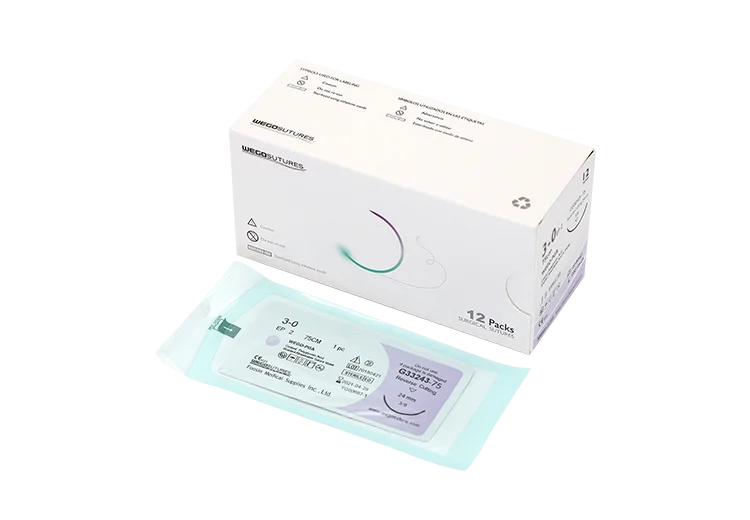
Closure of Soft Tissue and Mucosal Layers
One frequent use is the approximation of internal soft tissues and mucosal surfaces. A synthetic absorbable suture is often selected for closing layers in abdominal, gynecological, and urological surgeries. Its key advantage in these areas is the elimination of the need for later removal, which is impractical within body cavities. The material provides adequate tension during the initial healing phase, after which it undergoes hydrolysis. This absorption profile allows the wound to assume its natural strength without a permanent foreign body, which can be beneficial in reducing long-term inflammatory potential.
Utilization in Subcutaneous and Fascial Repair
Another core application lies in the closure of deeper structural layers, such as fascia and subcutaneous tissue. These layers require support over several weeks as they heal under significant mechanical stress. Modern variants of the synthetic absorbable suture are engineered with extended strength retention to meet this need. Surgeons rely on this extended support to approximate fascial edges securely, helping to prevent postoperative complications. The gradual loss of mass and tensile strength of these sutures aligns with the progression of collagen deposition and tissue remodeling in these critical structures.
Roles in Specific Surgical Specialties
The properties of these materials also make them applicable in specialized fields. In orthopedic surgery, for example, they may be used to repair soft tissue attachments or close deep fascial layers adjacent to bone. Pediatric surgery frequently employs a synthetic absorbable suture to avoid the distress and procedural burden of suture removal in young patients. The predictable absorption rate and minimal tissue reactivity are consistent factors driving their selection across these diverse specialties. At WEGO Medical, our development processes consider these varied clinical environments to support consistent performance.
The deployment of synthetic absorbable sutures is a reflection of their adaptable design and predictable biological interaction. Their use spans from general soft tissue approximation to the repair of load-bearing layers, always with the intent of supporting natural healing without permanent implantation. Understanding these applications helps surgical teams make aligned material selections. We view our work at WEGO Medical as part of this clinical ecosystem, providing tools that meet defined needs. The appropriate application of a synthetic absorbable suture is a calculated step toward achieving intended postoperative results.