







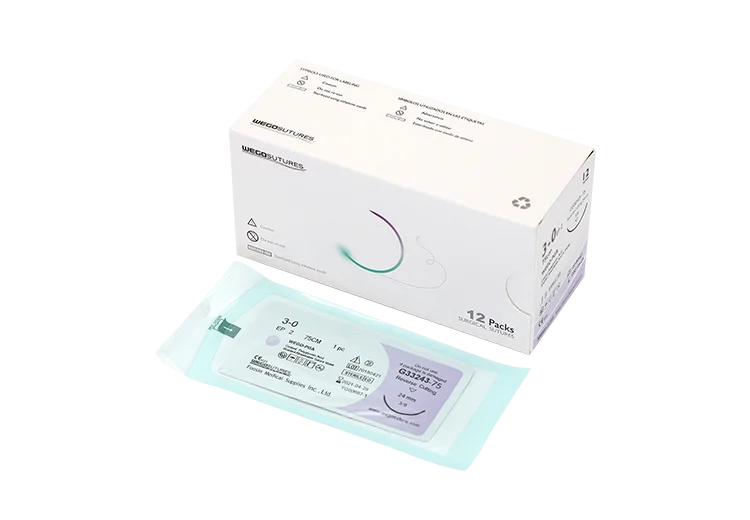
Proper management of surgical supplies is a procedural cornerstone that directly influences their performance during critical moments. One area that requires specific attention is the care of absorbable suture materials. At WEGO Medical, we provide insights into the effective storage and handling of a coated polyglycolic acid suture. This synthetic absorbable material possesses specific characteristics that guide its care from warehouse to wound. Adhering to defined protocols helps ensure that the suture’s designed performance is fully realized when needed.
Controlling the Storage Environment
The longevity and reliability of a coated polyglycolic acid suture begin with its storage conditions. These sutures should be kept in a cool, dry place, away from direct sources of heat and moisture. Excessive humidity can potentially initiate premature hydrolysis of the polyglycolic acid polymer, which might alter its intended absorption profile. Similarly, exposure to high temperatures can affect the integrity of both the filament and its coating. The original, unopened packaging is designed to provide a stable barrier, so maintaining this integrity until the point of use is a fundamental step. Consistent environmental control preserves the physical and mechanical properties that surgical teams depend on.
Aseptic Transfer and Intraoperative Handling
Once the sealed package is opened in the sterile field, handling practices become paramount. The coated polyglycolic acid suture should be transferred aseptically to the surgical table. It is advisable to avoid prolonged exposure to ambient air or frequent contact with saline-saturated gauze, as these can affect the lubricant coating. The coating itself is designed to reduce tissue drag and improve knot security; handling the suture gently by its needle or the looped end helps maintain this coating’s efficacy. When pulling suture through tissue, a smooth, controlled motion is preferable to a rapid, forceful pull, which could compromise the coating or the filament’s structure.
Avoiding Common Compromising Agents
The chemical stability of the material is another consideration for consistent performance. A coated polyglycolic acid suture can be sensitive to certain agents. For instance, contact with alcohol or other organic solvents should be avoided, as they may degrade the coating or the polymer itself. Additionally, while the suture is designed to withstand standard sterilization methods by the manufacturer, repeated or atypical exposure to sterilants after packaging is opened is not recommended. The focus should remain on using the product within its intended, single-use framework and keeping it away from substances that could alter its chemical composition before application.
The care applied to a coated polyglycolic acid suture directly supports its functional role in wound closure. By managing storage parameters, practicing attentive handling within the sterile field, and avoiding incompatible agents, the suture’s performance aligns with its engineering. These protocols exist to protect the investment in quality materials and to support predictable surgical outcomes. At WEGO Medical, our perspective is that reliable products are supported by informed practices, and we are engaged in providing the resources that make these practices clear for healthcare providers.