






Thoracolumbar spine procedures demand implant systems capable of maintaining alignment under continuous mechanical stress. A spinal fixation system for thoracolumbar stabilization must deliver sufficient rigidity to control motion while supporting biological healing across complex anatomical segments. As surgical indications expand, system design has evolved to balance strength, adaptability, and long-term reliability in demanding clinical environments.
Mechanical Challenges in the Thoracolumbar Region
The thoracolumbar junction is subject to significant biomechanical forces due to its transitional role between the thoracic and lumbar spine. A spinal fixation system for thoracolumbar stabilization must effectively withstand axial loading, bending moments, and rotational stress without compromising construct integrity. Insufficient rigidity in this region can lead to micromotion, increasing the risk of fixation failure or delayed fusion.
To address these challenges, modern systems incorporate optimized fixation depth and advanced screw-bone interfaces. Low-notch screw designs help preserve material strength while reducing stress concentration, enabling the construct to maintain stability under repeated physiological loading.
System Design Elements That Enhance Rigidity
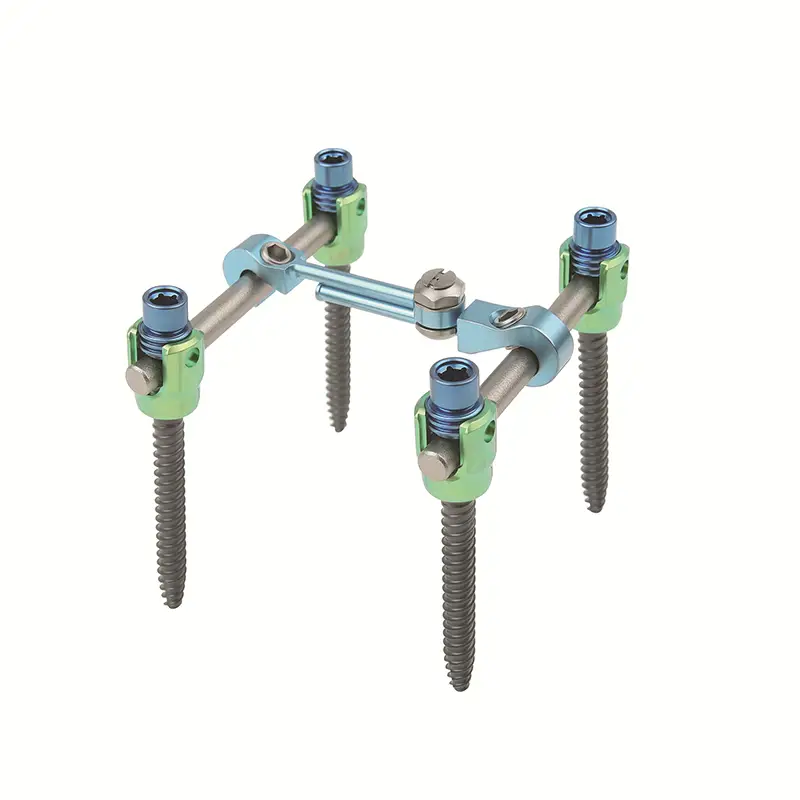
Rigidity is achieved through the coordinated performance of all system components. Screw geometry, rod diameter, and connector interfaces determine how mechanical loads are distributed across the construct. A well-designed spinal fixation system for thoracolumbar stabilization ensures uniform force transmission, minimizing localized stress that could weaken the fixation over time.
Material selection also plays a critical role. High-strength alloys allow implants to maintain stiffness without excessive bulk, supporting both mechanical performance and surgical handling. When combined with modular architecture, these materials provide surgeons with flexibility in construct configuration while preserving overall system rigidity.
Clinical Impact in Complex Thoracolumbar Applications
From a clinical perspective, superior rigidity supports predictable outcomes across a wide range of thoracolumbar indications, including degeneration, fractures, tumors, and spinal deformities. For skeletally mature patients requiring stabilization from T2 to S2, a rigid spinal fixation system for thoracolumbar stabilization helps maintain alignment throughout the fusion process.
Rigid constructs are particularly valuable in multilevel or revision procedures, where mechanical demands are higher and the margin for error is limited. By maintaining stable fixation, these systems reduce the likelihood of mechanical complications and support long-term surgical success.
Supporting Advanced Stabilization with WEGO Medical
At WEGO Medical, we leverage more than ten years of clinical insight and technological refinement to develop advanced spinal solutions. Our spinal fixation system for thoracolumbar stabilization is engineered to deliver high rigidity through optimized fixation depth, low-notch screw design, and high-strength materials. By focusing on mechanical stability and practical surgical performance, we aim to support spine surgeons in achieving durable outcomes across complex thoracolumbar procedures.