






Wound closure represents a critical phase in surgical recovery, with the materials used playing a definitive role in the healing trajectory. The properties of the chosen thread guide tissue approximation and long-term results. At WEGO Medical, our focus is on the engineering behind these vital products. This text compares the functional roles of absorbable and non-absorbable variants of the surgical suture, examining their distinct behaviors within biological systems.
Integration with Phases of Wound Healing
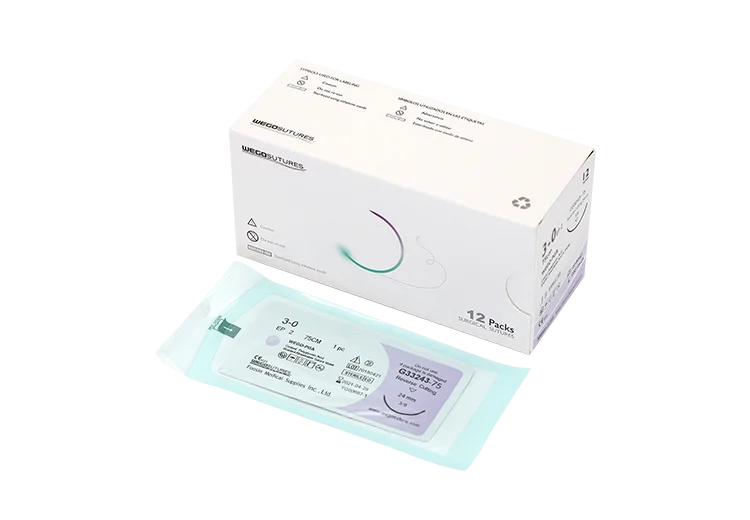
The selection between suture types aligns with the body’s natural repair sequence. An absorbable surgical suture provides temporary tensile strength during the critical proliferative phase. Its engineered degradation rate is designed to coincide with the point at which the wound has developed sufficient intrinsic strength, transferring support from the foreign material to the new tissue. A non-absorbable surgical suture, in contrast, offers prolonged mechanical support. It remains to counteract forces that might disrupt healing over an extended period, often requiring deliberate removal once its function is complete. This fundamental difference dictates their integration into the healing timeline.
Physical and Biological Interaction Properties
The interaction between suture material and tissue extends beyond strength. Absorbable polymers are formulated to elicit a predictable inflammatory response that facilitates their breakdown, with byproducts that the body can metabolize or eliminate. The focus is on a balance between initial performance and a controlled disappearance. Non-absorbable materials, such as certain polyesters or polypropylene, are designed for biological inertness and durability. Their structure aims to resist enzymatic breakdown, allowing them to persist with minimal ongoing tissue reaction, often becoming encapsulated.
Evaluating Parameters for Clinical Use
Surgeons weigh multiple intersecting parameters when deciding on a suture category. The location of the wound—internal versus external—is a primary driver. The expected presence of infection or contamination can influence material choice due to differing behaviors in such environments. Furthermore, the physical demands on the closed tissue, whether static or under dynamic stress, must be matched to the suture’s long-term performance profile. We support this evaluative process at WEGO Medical by ensuring access to both families of products, allowing for a choice grounded in specific procedural and patient needs rather than availability.
The decision between an absorbable and a non-absorbable thread is a deliberate exercise in applied material science. Each category fulfills a specific role, from providing transient scaffolding to offering enduring structural support. This choice directly impacts the efficiency and quality of the healing process. Our contribution at WEGO Medical is to deliver these options with consistent reliability, forming part of the toolkit for successful surgical outcomes. The appropriate surgical suture, selected through careful consideration, is a key factor in translating surgical skill into durable patient recovery.